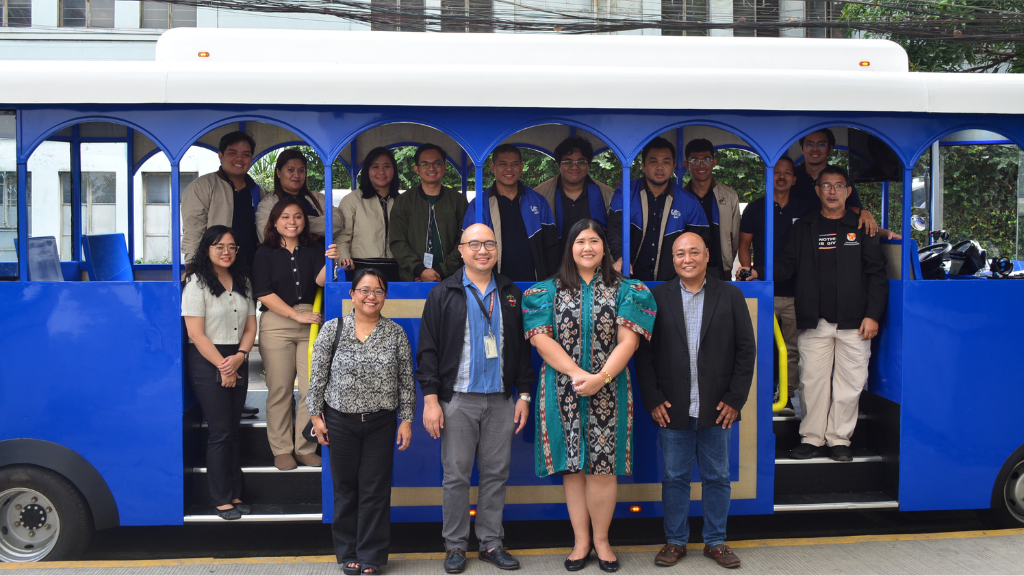
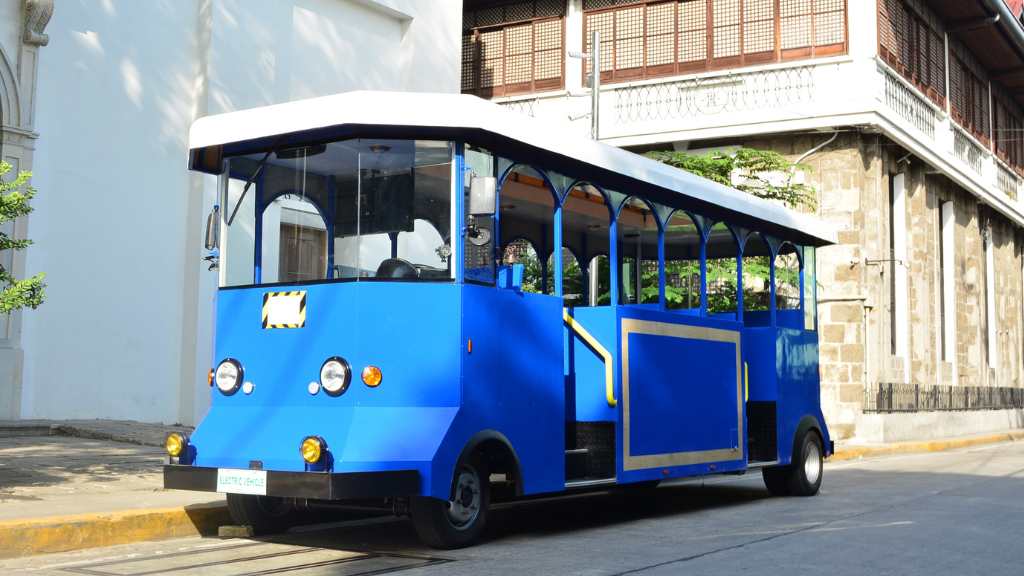
Intramuros, Manila – The University of the Philippines Diliman Electrical & Electronics Engineering Institute (UPD EEEI) together with Cagayan State University (CSU) and the Department of Science and Technology Industrial Technology Development Institute (DOST-ITDI) handed over the locally designed and manufactured electric tourist transport tranvia (e-Tram) to the Intramuros Administration last 13 February 2026. The 18-seater e-Tram was designed to provide tourists in Intramuros a clean, quiet and sustainable historical tour experience.
The electric tram project was funded by the Department of Science and Technology and kicked off last January 2025 with the aim of designing and manufacturing a vehicle optimized for tourist transport while also being aligned with the historical atmosphere of the Walled City of Intramuros. The general body design was conceptualized with the Intramuros Administration while the design and fabrication of the chassis and suspension system was handled by Cagayan State University. DOST-ITDI on the other hand handled the fabrication and assembly of the abaca-fiber composite body and roofing panels of the vehicle. Lastly, UPD EEEI designed and integrated the electrical and electronic system of the e-Tram which includes the lithium-ion battery system, electric motor and motor controller.
The original tranvias of Manila, also referred to as streetcars were deployed during the late 19th century up to the early 20th century. These early vehicles evolved from being horse-drawn coaches (tranvia de sangre) to having steam-powered locomotives and up to being electrified through Meralco. Majority of the early tramway system operated on tracks while during the Spanish era, trackless horse-drawn wheeled coaches were already used. But after World War II, much of the tramway system including the tracks were damaged beyond economical repair. The electric tram, together with the existing tranvias of Intramuros, resemble the wheeled coaches that feature a more train-like body configuration.
Prior to the introduction of the electric tranvia, the Intramuros Administration already operates two diesel-powered tranvias that are available for rental during historical tours inside the Walled City and other tourist destinations in Manila. The addition of the e-Tram to the fleet presents a greener alternative to the other vehicles being run by fossil fuels.
The 18-seater electric tranvia is propelled by a 20kW electric motor powered by a 140V lithium-ion (LiFePO4) battery system. The body panels, roofing and seats were constructed using abaca-fiber composite material to reduce weight while still maintaining material strength and durability. The project made sure to showcase the utilization of indigenous raw materials like abaca in the fabrication of the vehicle. The vast campus of UP Diliman also served as the testing grounds for the e-Tram during its testing and characterization phase.
The handover event in Intramuros was also supplemented by technical training, vehicle demonstration, surveys and focus group discussions that served as the culminating activity for the eTram project team. Together with project leaders from each implementing agencies – UPD, CSU, DOST-ITDI; the event was attended by Atty. Joan M. Padilla, Administrator of Intramuros who warmly welcomed the eTram project team and the addition of the green and sustainable vehicle to their transport fleet.